
Reed diffusers are one of the easiest ways to keep your home smelling fresh without using electricity, flames, or sprays. They quietly release fragrance throughout the day, making them a favorite choice for living rooms, bedrooms, bathrooms, and offices. However, many people overlook one simple detail that directly affects their performance—the condition of the reed sticks.
If you’ve ever noticed that your diffuser suddenly seems weaker even though there’s still plenty of fragrance oil left, the reeds are often the reason. Over time, they become saturated, clogged with dust, and less effective at drawing oil upward.
So, how often should you change reed diffuser sticks? The answer depends on how often you flip them, the type of fragrance oil, the room environment, and the quality of the reeds. In this guide, you’ll learn exactly when to replace reed diffuser sticks, how to make them last longer, and the signs that tell you it’s time for a fresh set.
Why Reed Diffuser Sticks Need Replacing

Reed diffuser sticks work by absorbing scented oil through tiny channels inside each reed. The oil gradually travels upward and evaporates into the air, spreading fragrance around the room.
As weeks pass, those channels begin to clog with dried fragrance oils, dust, and microscopic particles. When this happens, the reeds can no longer transport oil efficiently, causing the scent to become much weaker.
Replacing only the fragrance oil isn’t always enough. If the reeds are already blocked, fresh oil won’t travel properly, meaning you’ll continue getting poor fragrance performance.
Changing the reeds regularly restores the diffuser’s ability to distribute fragrance evenly and helps you get the most value from every bottle of diffuser oil.
How Often Should You Change Reed Diffuser Sticks?
The ideal replacement schedule is every 2 to 3 months for most homes.
This recommendation works well for standard reed diffusers used under normal indoor conditions. However, several factors can shorten or extend this timeframe.
You may need to replace your reeds sooner if:
- You flip the reeds several times each week.
- The diffuser sits in direct sunlight.
- The room is warm throughout the year.
- You use thick essential oil blends.
- The room collects dust quickly.
In cooler, cleaner environments where the diffuser isn’t disturbed often, quality reeds can continue working effectively for nearly three months.
Whenever you start a completely new fragrance oil, replacing the reeds is also recommended. Old reeds already contain traces of the previous scent, and mixing fragrances can produce an unpleasant smell.
Signs It’s Time to Change Reed Diffuser Sticks
Your diffuser usually gives clear signs when the reeds have reached the end of their useful life.
The Fragrance Has Become Weak
The most common sign is a noticeable decrease in scent, even though the bottle still contains plenty of oil.
The Reeds Look Dark or Discolored
Over time, fragrance oils stain the reeds. Dark brown or heavily saturated reeds indicate they’ve absorbed as much oil as they can.
The Oil Level Hardly Drops
Normally, the oil slowly decreases as it evaporates into the room.
If the oil level barely changes over several weeks, clogged reeds are often preventing proper absorption.
Dust Has Collected on the Reeds
Dust sticks to oily surfaces easily.
Dirty reeds reduce fragrance output and can affect indoor air quality if left untouched for long periods.
You’ve Switched to a New Fragrance
Even if the reeds seem fine, replacing them when changing scents keeps each fragrance pure and prevents unwanted mixing.
Can You Clean Reed Diffuser Sticks?
Many people wonder whether washing the reeds can restore them.
Unfortunately, the answer is no.
Reed diffuser sticks are made from porous natural rattan or specially designed fiber materials. Once the tiny internal channels become blocked with fragrance oil, they cannot be fully cleaned.
Water causes natural reeds to swell, while soap leaves residue that prevents oil from traveling properly.
Because replacement reeds are inexpensive, it’s much more effective to install a fresh set than attempt cleaning old ones.
How to Replace Reed Diffuser Sticks Correctly
Replacing diffuser reeds only takes a few minutes.
Step 1: Remove the Old Reeds
Carefully pull out all the used reeds and dispose of them responsibly.
Avoid placing oily reeds directly onto wooden furniture since fragrance oils may stain surfaces.
Step 2: Wipe the Bottle Neck
Use a soft tissue or paper towel to remove any dried oil around the bottle opening.
This helps new reeds absorb oil more efficiently.
Step 3: Insert New Reed Sticks
Place fresh reeds evenly into the diffuser bottle.
Most medium-sized diffusers perform best with six to eight reeds.
Step 4: Flip the Reeds
After allowing the reeds to absorb oil for about one hour, carefully flip them once.
This jump-starts the fragrance diffusion process.
Step 5: Enjoy Consistent Fragrance
Your diffuser should begin releasing fragrance steadily over the next several hours.
How to Make Reed Diffuser Sticks Last Longer
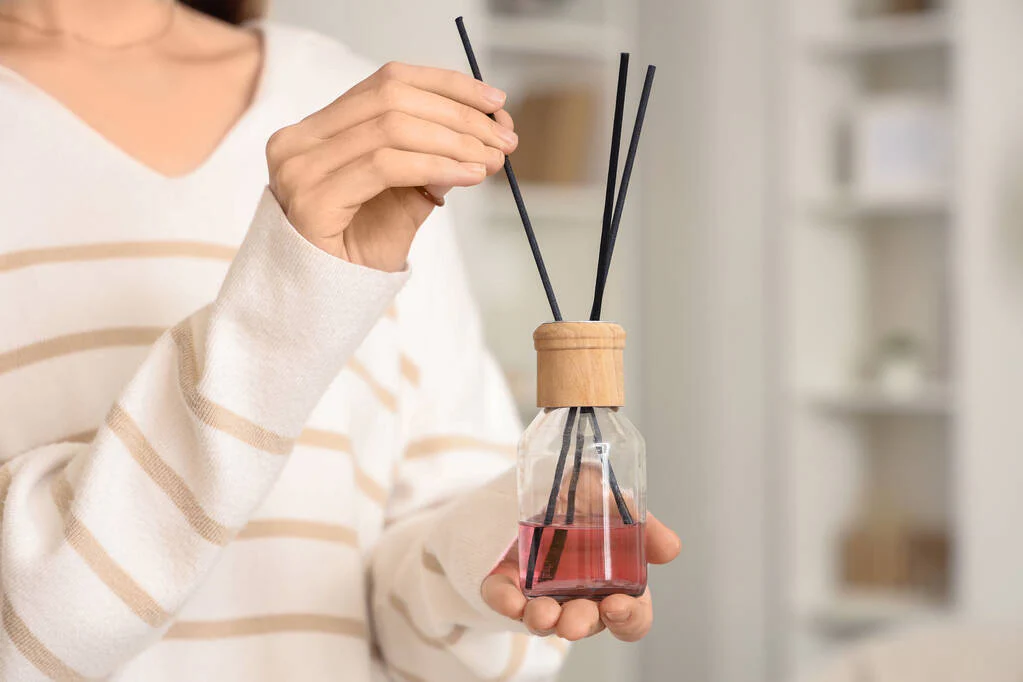
Although reed sticks eventually need replacement, proper care can significantly extend their lifespan.
Avoid Direct Sunlight
Heat speeds up oil evaporation and causes reeds to clog faster.
Place diffusers in shaded indoor areas instead of sunny windows.
Keep Away From Fans
Strong airflow evaporates fragrance too quickly.
Position diffusers away from ceiling fans, air conditioners, and open windows.
Flip the Reeds Only When Needed
Flipping refreshes the scent but also saturates both ends more quickly.
For most homes, flipping once every seven to ten days provides a good balance between fragrance and longevity.
Choose High-Quality Reed Sticks
Cheap decorative reeds often have poor absorbency.
Natural rattan reeds with visible internal channels generally deliver stronger fragrance and longer performance.
Clean Around the Diffuser
Regular dusting prevents debris from collecting on exposed reeds.
A clean environment helps maintain consistent fragrance diffusion.
How Many Reed Sticks Should You Use?
The number of reeds directly affects fragrance strength.
Here’s a simple guideline:
| Room Size | Recommended Reeds |
|---|---|
| Small bathroom | 4–5 reeds |
| Bedroom | 5–6 reeds |
| Living room | 7–8 reeds |
| Large open space | 8–10 reeds |
Using more reeds creates a stronger scent but also consumes fragrance oil faster.
If the fragrance feels too intense, simply remove one or two reeds instead of replacing the entire diffuser.
Common Mistakes That Reduce Reed Diffuser Performance
Many people unknowingly shorten the life of their diffuser.
Some common mistakes include:
- Never replacing old reeds.
- Flipping reeds every day.
- Placing diffusers beside heating vents.
- Mixing different fragrance oils.
- Using damaged or broken reeds.
- Touching oily reeds with bare hands repeatedly.
- Allowing dust to accumulate around the bottle.
Avoiding these habits helps maintain stronger fragrance and extends the life of both the oil and the reeds.
Do Different Reed Materials Last Longer?
Yes.
Natural rattan reeds remain the industry standard because they contain tiny internal channels that draw fragrance upward efficiently.
Fiber reeds, which are made from engineered materials, often provide even more consistent fragrance and may last slightly longer than traditional rattan reeds.
Decorative bamboo sticks should not be confused with diffuser reeds. Although they look attractive, they don’t absorb fragrance oil effectively and shouldn’t be used as replacements.
Should You Replace the Reeds When Refilling the Diffuser?
Yes.
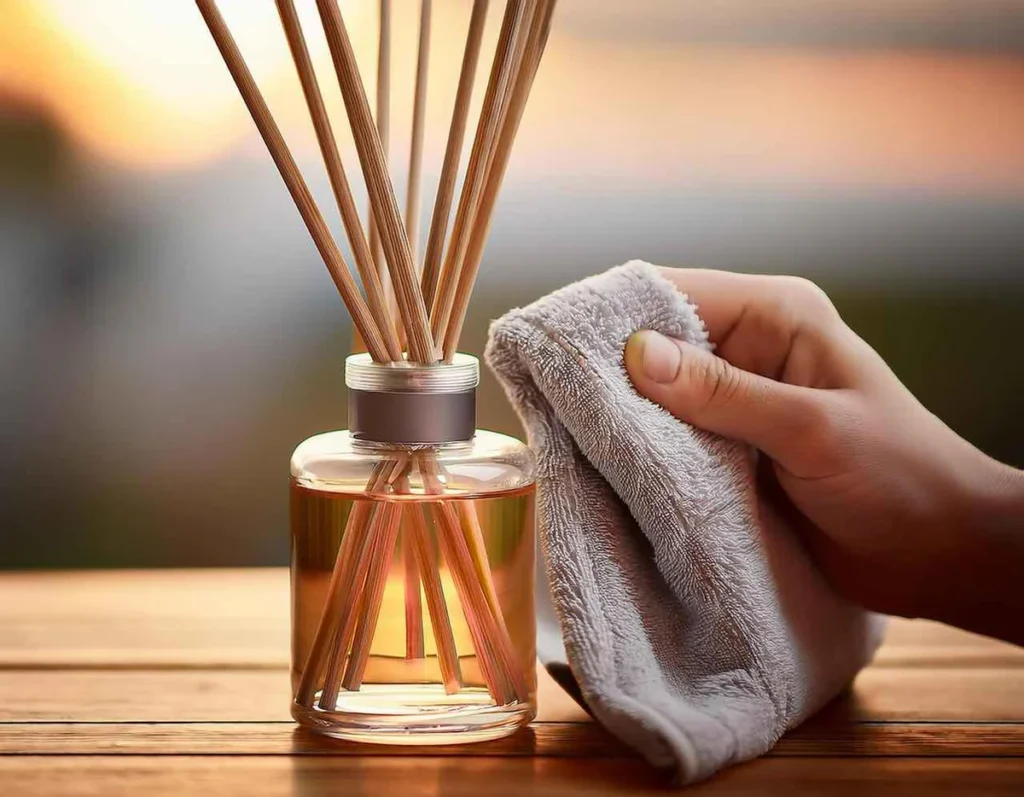
Whenever you refill a diffuser with fresh oil, installing new reeds is considered best practice.
Old reeds have already absorbed months of fragrance oils and lose much of their capillary action.
Fresh reeds restore the diffuser’s full performance, allowing the refill oil to evaporate evenly and produce a stronger scent.
Considering that replacement reeds are inexpensive compared to premium diffuser oils, changing both together offers the best overall value.
Frequently Asked Questions
1. How often should you change reed diffuser sticks?
Most experts recommend replacing reed diffuser sticks every 2 to 3 months, or whenever the fragrance becomes noticeably weaker.
2. Can I reuse old reed diffuser sticks?
Reusing old reeds is not recommended because clogged channels prevent proper oil absorption and reduce fragrance output.
3. Should I flip the reeds every day?
No. Flipping them every day causes faster oil consumption and shortens the life of both the reeds and the fragrance. Once every week is usually enough.
4. Why does my diffuser stop smelling even though oil remains?
The reeds have likely become saturated or clogged. Replacing them usually restores normal fragrance diffusion.
5. Do expensive reed sticks last longer?
Higher-quality natural rattan or premium fiber reeds generally provide better fragrance performance and often last longer than inexpensive decorative alternatives.
Conclusion
Knowing how often should you change reed diffuser sticks is one of the easiest ways to keep your home consistently fresh and inviting. While most reed sticks perform well for about two to three months, factors such as room temperature, dust, airflow, and fragrance type can affect their lifespan.
Watch for signs like weaker fragrance, darkened reeds, or slow oil consumption, and replace the sticks whenever they stop working efficiently. Pairing fresh reeds with new diffuser oil ensures better scent distribution, prevents fragrance mixing, and helps you get the maximum performance from your diffuser.
With just a little routine maintenance and proper placement, your reed diffuser can continue providing a pleasant, long-lasting aroma that enhances the comfort and atmosphere of every room in your home.

Leave a Reply