
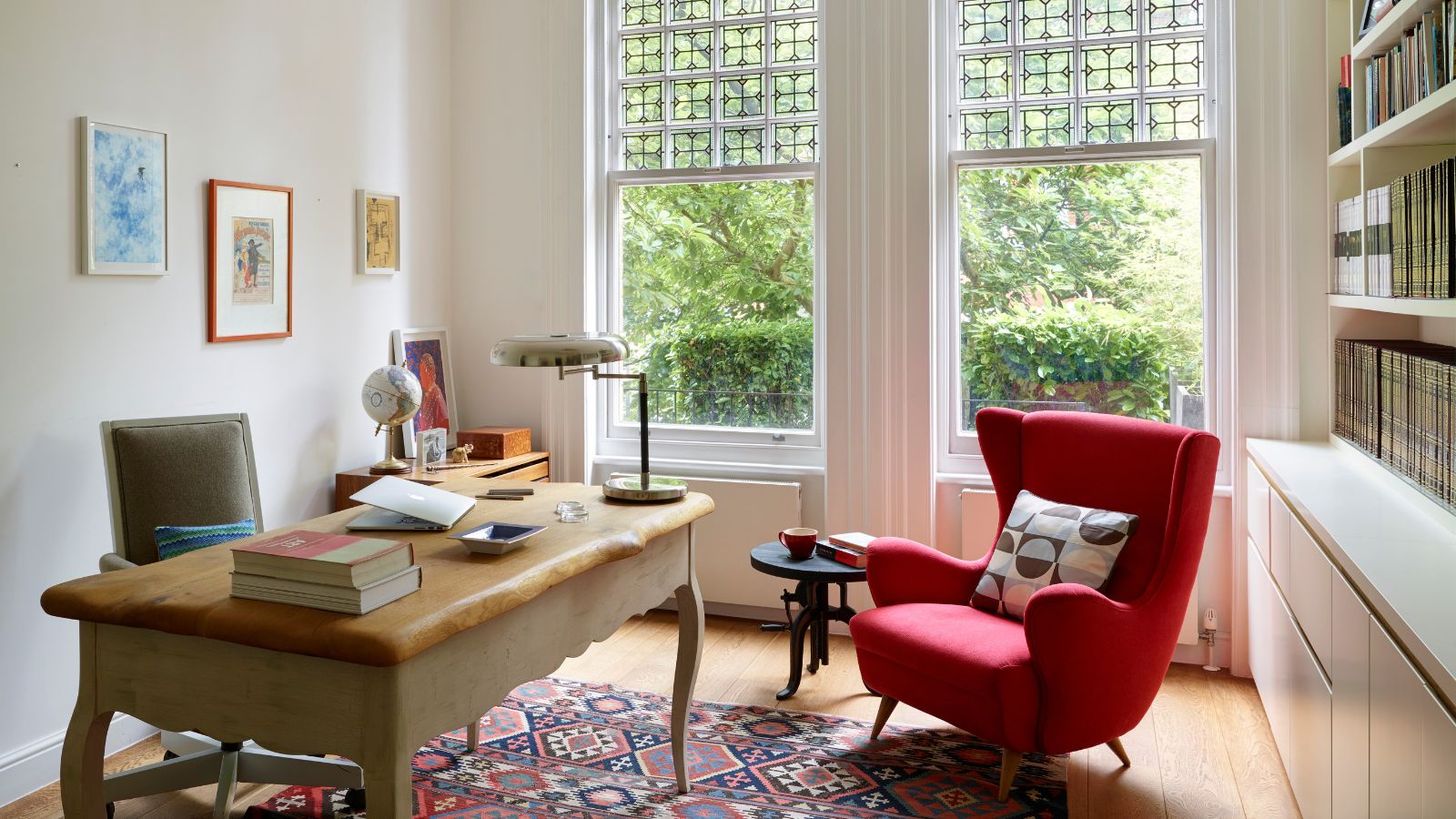
Creating a peaceful workspace is about much more than choosing a stylish desk or buying expensive accessories. The environment around you directly affects your mood, concentration, creativity, and productivity. Whether you work from home, study online, or simply spend hours at your computer, a calm workspace can help reduce stress while making everyday tasks feel easier.
The best desk setup ideas for a calm workspace combine organization, comfort, natural elements, and thoughtful design. You don’t need a large office or a big budget to create a space that feels relaxing. Small improvements like better lighting, fewer distractions, ergonomic furniture, and simple décor can completely transform the way you work.
In this guide, you’ll discover practical ideas that help create a workspace that supports both focus and well-being.
Why a Calm Workspace Matters
A cluttered and uncomfortable desk can quietly increase mental fatigue throughout the day. When your workspace feels organized and peaceful, your brain spends less energy processing distractions and more energy focusing on meaningful work.
People who work in calm environments often notice benefits such as:
- Better concentration
- Reduced stress
- Improved productivity
- More creativity
- Better posture and physical comfort
- Easier work-life balance when working from home
Creating a calming workspace doesn’t require expensive renovations. Instead, it starts with making intentional choices about your desk, lighting, colors, and daily habits.
Choose the Right Desk and Chair
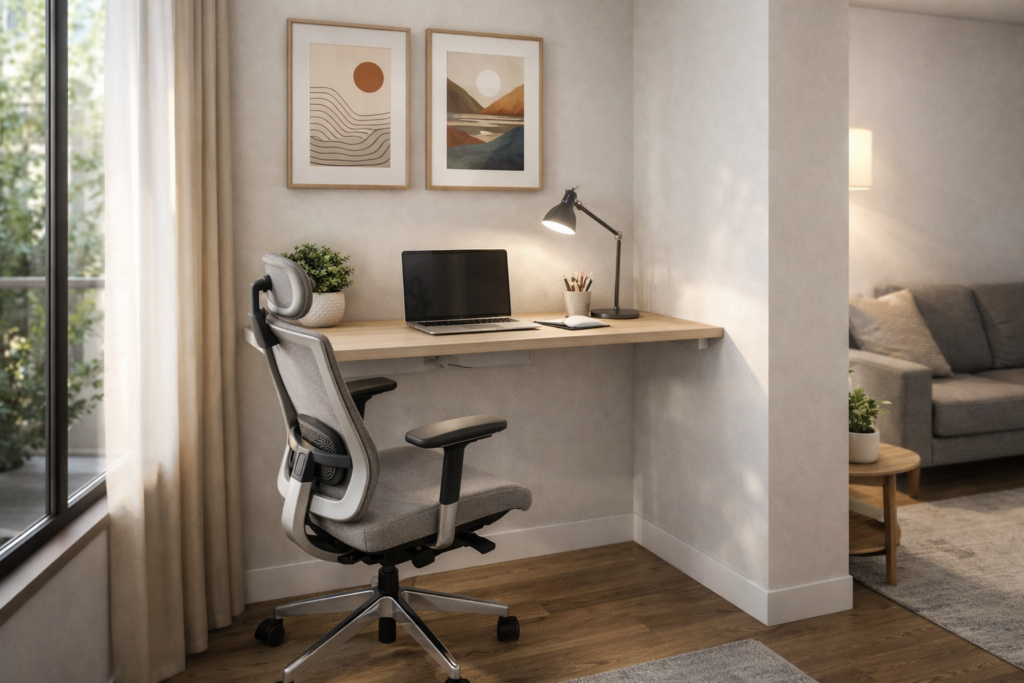
Your desk and chair form the foundation of your workspace. Even the most beautiful accessories cannot compensate for uncomfortable furniture.
Choose a desk that provides enough room for your computer, notebook, and essential items without feeling overcrowded. Extra surface space naturally reduces clutter.
An ergonomic chair is equally important. Look for features such as adjustable height, proper lumbar support, comfortable cushioning, and adjustable armrests. Sitting comfortably for long periods helps reduce neck, shoulder, and back strain.
If possible, position your desk near a window where natural light is available throughout the day.
Keep Your Desk Clutter-Free
A calm workspace begins with visual simplicity.
Instead of filling every corner with gadgets and decorations, keep only the items you regularly use. Everything else can be stored in drawers, shelves, or storage boxes.
Some useful organization ideas include:
Use Desk Organizers
Pen holders, trays, drawer dividers, and cable organizers help everything stay in its place.
Hide Cable Clutter
Messy charging cables instantly make a workspace look chaotic. Use cable clips, sleeves, or under-desk trays to keep wires organized.
Adopt the “One Minute Rule”
If putting something away takes less than one minute, do it immediately. This simple habit prevents clutter from building up over time.
Use Natural Light Whenever Possible
Lighting has a significant impact on your mood and energy levels.
Natural sunlight helps reduce eye strain while creating a more welcoming atmosphere. Position your desk so daylight comes from the side instead of directly behind or in front of your monitor.
If natural light isn’t available, choose warm LED lighting instead of harsh white lighting.
A quality desk lamp with adjustable brightness allows you to change lighting depending on your tasks and the time of day.
Choose Calm Colors
Color psychology plays an important role in workspace design.
Soft, neutral shades help create a peaceful atmosphere while reducing visual stress.
Some excellent color choices include:
White
Creates a clean and spacious feeling.
Beige
Adds warmth without becoming distracting.
Soft Gray
Offers a modern and calming appearance.
Sage Green
Brings a subtle connection to nature.
Light Blue
Encourages relaxation and focus.
You don’t have to repaint your room. Even accessories such as desk mats, organizers, notebooks, or wall art can introduce calming colors.
Add Indoor Plants
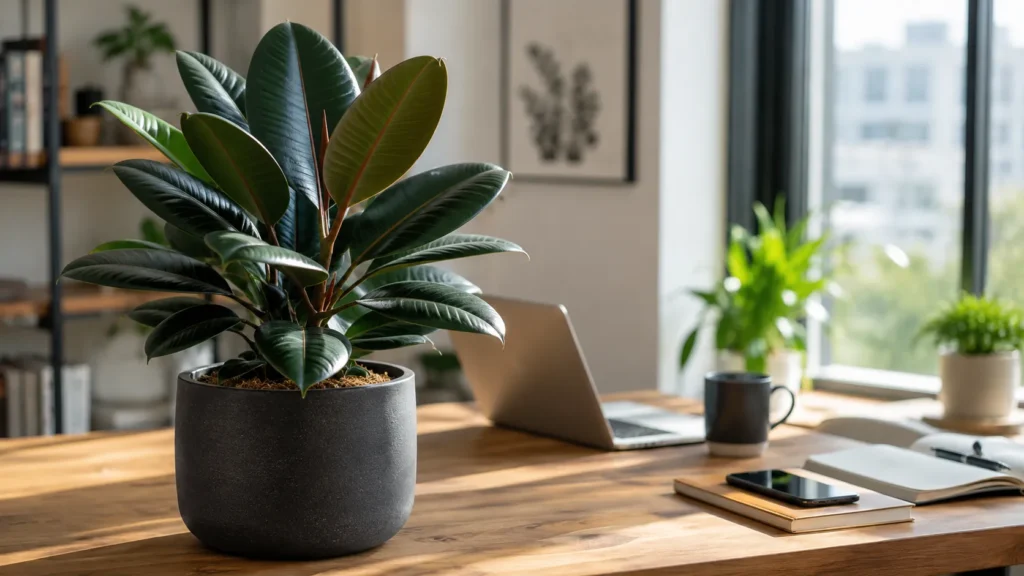
Plants instantly make a workspace feel more alive and inviting.
Many indoor plants require very little maintenance while helping soften the appearance of electronics and office equipment.
Some beginner-friendly options include:
Snake Plant
Needs minimal watering and tolerates low light.
Pothos
Fast-growing and easy to maintain.
ZZ Plant
Excellent for busy people who sometimes forget watering.
Peace Lily
Adds elegant greenery while thriving indoors.
Even one small plant can make your workspace feel noticeably calmer.
Prioritize Ergonomic Comfort
A beautiful workspace should also support your physical health.
Position your monitor so the top of the screen sits at eye level. This helps reduce neck strain.
Your keyboard and mouse should allow your elbows to remain close to your body while your wrists stay straight.
Keep your feet flat on the floor or use a footrest if needed.
If you spend many hours sitting, remember to stand up, stretch, and walk for a few minutes every hour.
Create a Distraction-Free Environment
Digital distractions can quickly interrupt your workflow.
Try these simple strategies:
- Turn off unnecessary notifications.
- Keep your phone out of reach during focused work sessions.
- Wear noise-canceling headphones if your environment is noisy.
- Keep only the tabs you’re actively using open.
- Schedule specific times to check emails and social media.
Reducing distractions helps your workspace feel mentally peaceful as well as visually organized.
Add Personal Touches Without Overcrowding
Personal décor makes a workspace feel welcoming, but too many decorative items create visual clutter.
Instead, choose only a few meaningful accessories, such as:
- A framed family photo
- Inspirational artwork
- A favorite coffee mug
- A scented candle
- A small sculpture
- A simple desk calendar
Every item should either serve a purpose or bring genuine happiness.
Improve Air Quality
Fresh air contributes to better focus and overall comfort.
Whenever possible, open windows for a few minutes each day to improve ventilation.
If outdoor conditions don’t allow this, consider using an air purifier or adding more indoor plants.
A clean, fresh-smelling workspace naturally feels calmer than one with stale air.
Keep Frequently Used Items Within Reach
Think about the tools you use every day.
Your notebook, headphones, pens, charger, and water bottle should all be easy to access without searching through drawers.
Everything else can be stored away until needed.
This simple arrangement helps maintain a clean desk while improving efficiency.
Create a Daily Reset Routine
One of the easiest ways to maintain a calm workspace is by ending each workday with a quick cleanup.
Spend five minutes:
- Returning items to their place
- Wiping the desk surface
- Organizing cables
- Throwing away unnecessary papers
- Preparing tomorrow’s notebook or planner
Starting each morning with a clean desk creates a positive mindset before work even begins.
Add Soft Textures
Hard office furniture sometimes feels cold and uninviting.
Adding soft textures creates warmth without creating clutter.
Consider including:
- A fabric desk mat
- Linen curtains
- A comfortable chair cushion
- A woven storage basket
- A small area rug
These subtle additions make the workspace feel more comfortable throughout the day.
Choose Minimal Desk Accessories
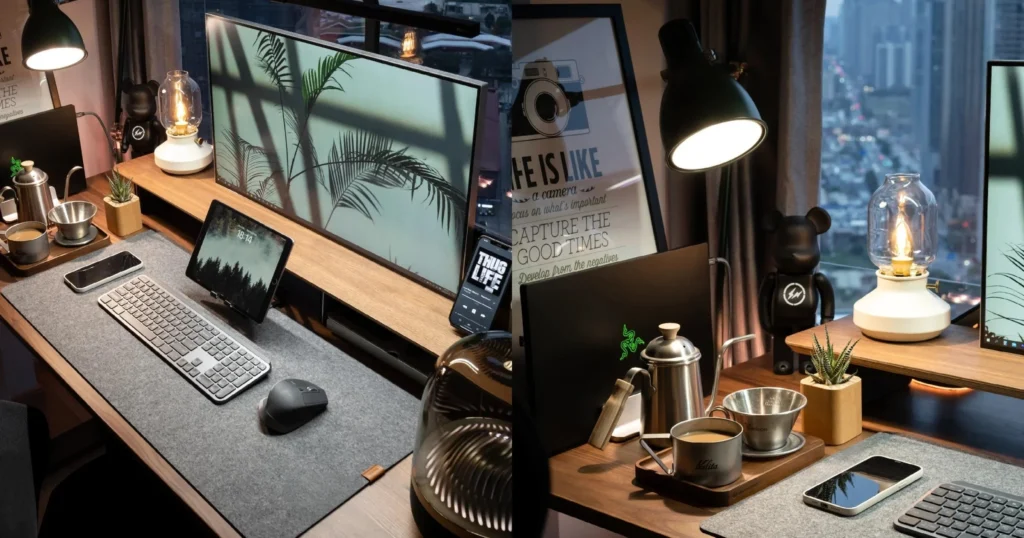
Minimalism isn’t about owning less—it’s about keeping only what truly adds value.
Some essential desk accessories include:
Desk Lamp
Provides comfortable lighting for reading and computer work.
Notebook
Keeps ideas organized without relying entirely on digital notes.
Water Bottle
Encourages healthy hydration throughout the day.
Headphone Stand
Keeps headphones organized and prevents desk clutter.
Monitor Stand
Raises your monitor to a more comfortable viewing height while creating extra storage underneath.
Build a Workspace That Reflects Your Routine
Every person works differently.
A designer may need a large monitor and drawing tablet, while a writer might prefer a quiet desk with a notebook and minimal distractions.
Instead of copying someone else’s workspace exactly, build one that supports your own habits.
Ask yourself:
- What tools do I use every day?
- What distractions reduce my focus?
- What makes me feel relaxed while working?
- Which items rarely get used?
Answering these questions helps create a workspace that’s practical rather than simply attractive.
Common Mistakes to Avoid
Many people unintentionally create stressful workspaces by making a few common mistakes.
Avoid:
- Buying too many desk accessories.
- Ignoring ergonomic posture.
- Working in poor lighting.
- Allowing cables to remain messy.
- Keeping unnecessary papers on the desk.
- Choosing uncomfortable chairs.
- Filling every empty space with decorations.
A calm workspace values simplicity over excess.
Frequently Asked Questions
1. What is the most important part of a calm workspace?
A clean, organized desk combined with comfortable furniture has the greatest impact on creating a calm workspace.
2. Which colors are best for a relaxing desk setup?
Soft white, beige, light gray, sage green, and light blue are excellent choices because they create a peaceful atmosphere without becoming distracting.
3. How can I improve my workspace on a small budget?
Start by decluttering your desk, improving lighting, organizing cables, adding one small plant, and using inexpensive storage organizers. These changes can make a noticeable difference without spending much.
4. Are plants really helpful in a workspace?
Yes. Indoor plants make workspaces feel more inviting and can contribute to a more relaxing environment while adding natural beauty.
5. How often should I organize my desk?
A quick five-minute cleanup at the end of each workday helps prevent clutter from building up and keeps your workspace consistently calm.
Conclusion
The best desk setup ideas for a calm workspace are not about following trends or buying expensive furniture. Instead, they focus on creating an environment that supports comfort, concentration, and well-being every day.
By keeping your desk organized, choosing ergonomic furniture, using natural light, adding a few plants, and reducing unnecessary distractions, you can transform even a small corner into a peaceful workspace. Small, thoughtful improvements often have the biggest impact, helping you stay productive while making your workday feel more balanced and enjoyable.

Leave a Reply